
Equipment Guide
Backpack Packing Basics
This guide offers a simpler packing structure for day hikes, nearby parks, and short overnight outings.
Intended for
Beginner hikers and family day-trip planners
Read time
6 min read
Published
2026-05-04
Updated
2026-05-04
A clear, beginner-friendly guide to balancing pack weight, access, and comfort for everyday outdoor outings.
Start with access, not just weight
A well-packed bag is not only lighter to carry. It also makes the day calmer because water, layers, snacks, and first-aid items are easy to reach when conditions change.
For beginner-friendly outdoor use, the goal is not an expedition system. It is a repeatable setup that feels clear enough to use again next weekend.
Keep the heaviest items close to your back
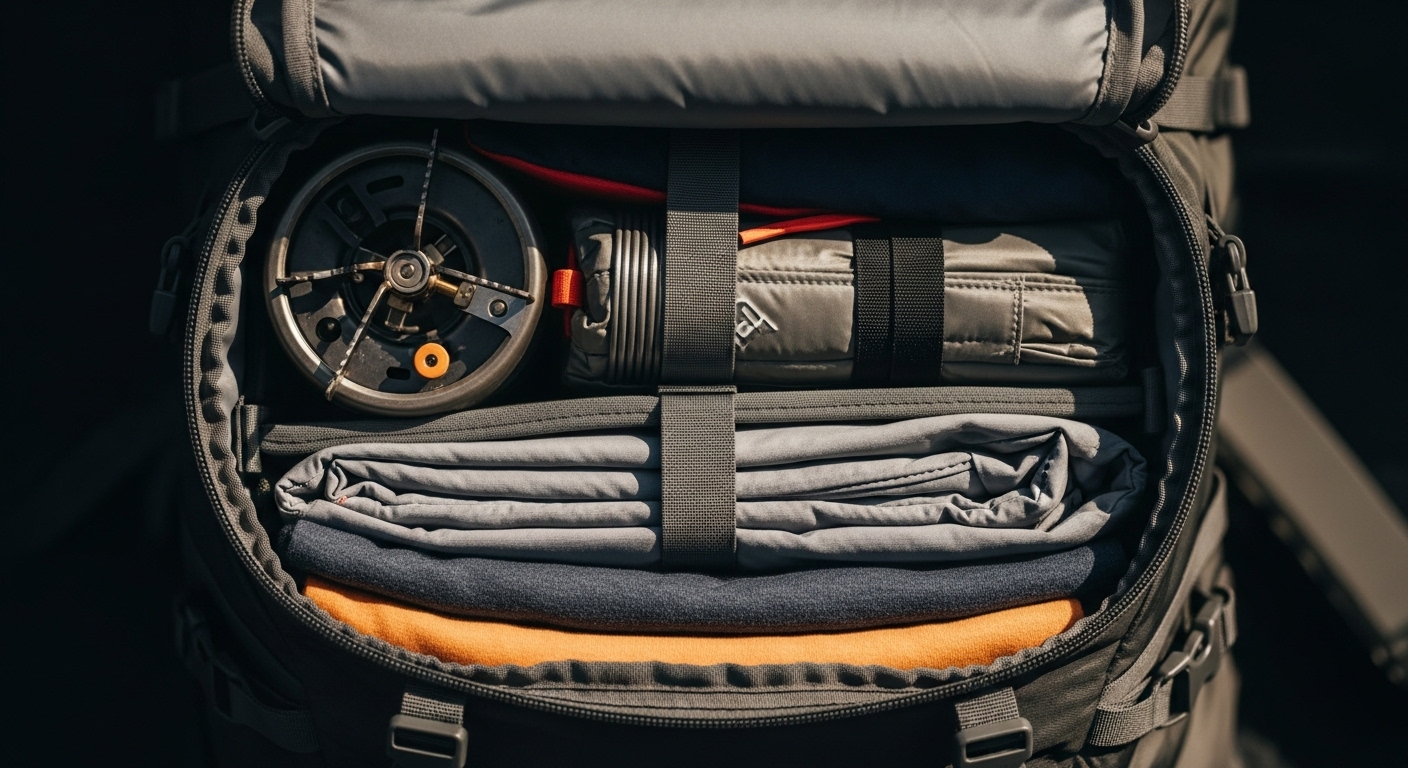
Dense items such as water, cooking tools, or food packs should sit close to the center of the body. This keeps the load more stable and reduces the feeling of being pulled backward.
Bulky but lighter pieces, such as extra layers, can fill the outer spaces and help keep the pack compact.
Build a simple order you can repeat
Place least-used gear at the bottom, medium-weight pieces in the center, and weather or safety essentials near the top. Side pockets should serve only what you truly need on the move.
If the system feels too complicated to repeat, simplify it. The best packing method is the one your whole household can remember.