
Outdoor Skill
Trekking Pole Technique
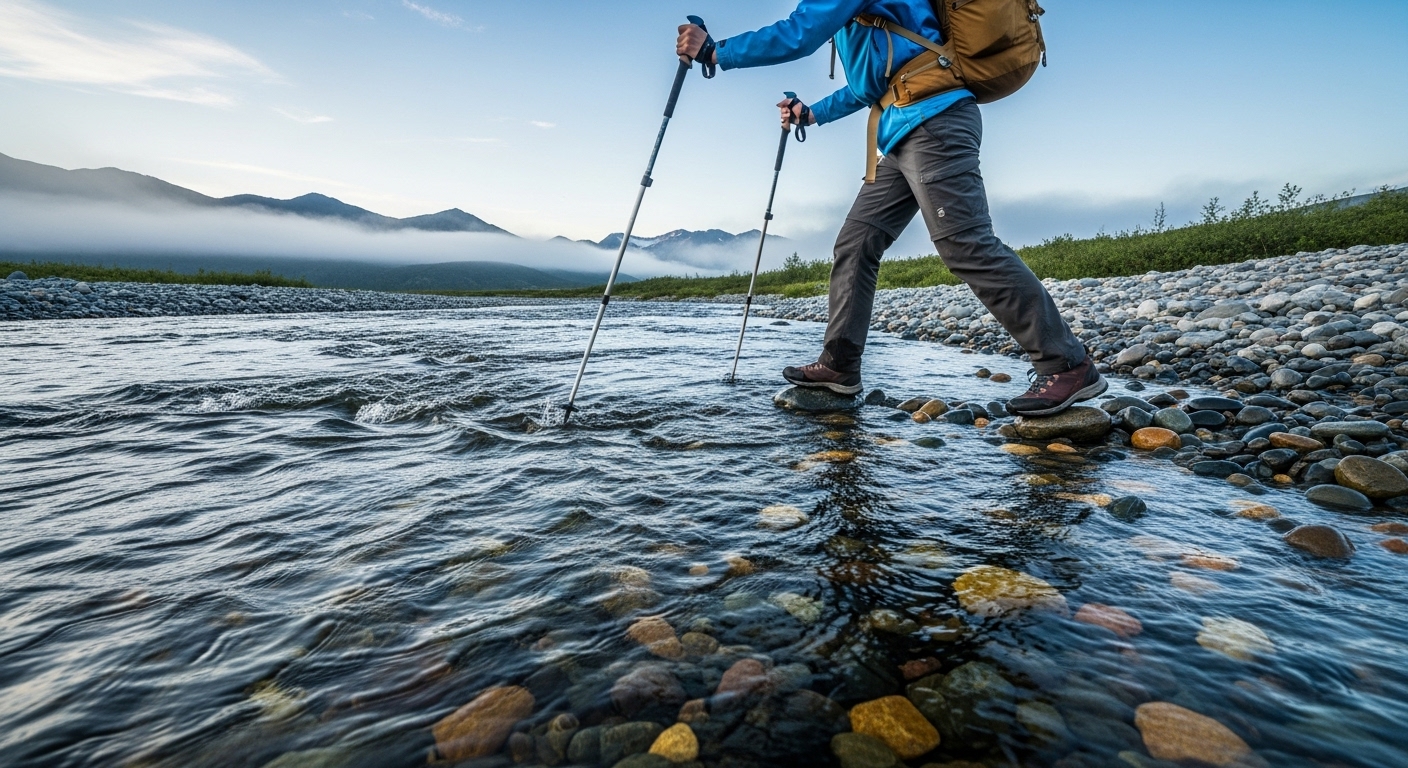
Trekking poles are often introduced as technical gear, but for many people they are simply a way to feel steadier, less fatigued, and more confident on uneven ground.
Intended for
Day hikers and mixed-experience trail groups
Read time
6 min read
Published
2026-05-04
Updated
2026-05-04
A practical introduction to trekking pole use built around approachable movement and steady trail confidence.
Adjust for the terrain you are actually walking
A pole height that feels right on flat ground may feel different on a climb or descent. Small adjustments help the poles work with your body instead of against it.
That is one reason they are valuable for beginner groups: they add support without demanding speed or advanced skill.
Use rhythm to reduce strain
Poles work best when they support a calm walking rhythm. On moderate terrain, they can help share effort between the legs and upper body and reduce the sense of pounding on descents.
Think of them as part of a walking pattern, not as something to grip tightly the whole time.
Prioritize confidence over intensity
The most useful technique is the one that keeps people moving safely and comfortably. If a pole helps someone enjoy a longer walk or feel less anxious on a slope, it is doing its job.
That practical view matches the brand’s wider approach to gear: useful support for real outdoor routines.